
 +38 (099) 799-99-92
  +38 (067) 55-999-05
  +38 (067) 55-999-07
 White pigment – history and modernity.
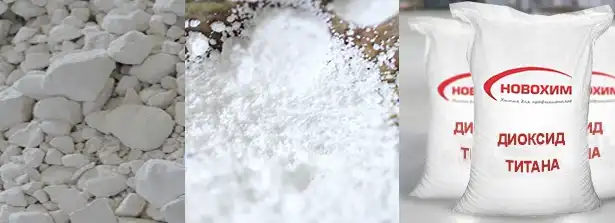
The history of natural white pigment.
The history of this pigment dates back to ancient times, more precisely after the Cretaceous period. When the volumes of the oceans decreased and became numb. Then, along with the newly formed land, the remains of ancient marine animals came to the surface in the form of limestone deposits, which had accumulated on the seabed for many millions of years. Limestone, aka chalk or calcium carbonate – this is the first white pigment known to mankind. Later, white clay or kaolinite mineral (kaolin).
The use of mineral dyes in ancient times.
Ancient people used these pigments for rock art, as well as for application to the body in rituals and ceremonies. Small tribes in Africa, New Guinea and South America, who have preserved their ancient traditions, use natural white pigments in their customs to this day. In addition, chalk and kaolin are successfully used as fillers in manufacturing, cosmetics and construction industries.
Masters of Kievan Rus back in the 11th-12th centuries had a number of natural pigments in their arsenal, which helped them create masterpieces of art of that time.< /span>
Synthetic white pigments and their applications.
Later, with the advent of technology and production, chemically synthesized substances appeared in everyday life. One of these synthetic pigments was lead dioxide or lead white, obtained from lead ore. Thanks to its color fastness and excellent hiding power, it became in demand in Europe at that time. Several centuries ago, at the turn of the 17th century, ladies even used it to whiten their skin. However, due to its toxic effects on humans, lead dioxide has ceased to be used. Moreover, it is currently banned from production.
In the 19th century, the safe zinc oxide. And here it is worth noting that zinc white, as a pigment for paints, had several drawbacks. They are more expensive in price, with a lower color saturation and a cold tint, as well as a weak hiding power, for a long time could not completely displace lead dioxide from the market.
This situation continued until the beginning of the 20th century, namely until the advent of titanium dioxide.
Titanium white immediately conquered the world market as:
- White pigment for paints and plastics
- White pigment for concrete and epoxy
- Dyes for the food industry – food grade titanium dioxide
- White pigment for foundation and other cosmetics
- Dyes for process fluids, soaps
- White color pigment for paper and textile industry
- Coloring agent for rubber
- Pigment in pharmaceuticals
It should be added that due to the rich snow-white color, warm shade, opacity, high hiding power, inexpensive price, the production of white pigment titanium dioxide occupies a leading position.
Demand creates supply, so it is currently possible to buy white pigment in several brands, depending on the request of the buyer and the industry in which the substance is used. For example, titanium dioxide produced in Ukraine has the following grades: RTs-10, R-202, R-203, R-206, RTs-9, RTs-20 and some others.
You can read more about the white pigment titanium dioxide here
Another popular pigment today is barium sulfate or barium sulfate. It differs from all barium salts in its low solubility and, therefore, the absence of toxic effects on the human body.
Most often, barium sulfate is used as a white dye in two ways:
- medicine, as barite porridge for radiographic studies.
- lithopon filler pigment, namely barium sulphate combined with zinc sulphide.
Successfully serves in the production of stationery, printing inks, filler for plastics, paper, paints and rubber and in other industries.
Please note that Lithopone-based building materials can only be used for interior work. This is due to the high ability to burn out and the lack of proper weather resistance of the pigment. It is absolutely safe for humans.